
Celsius to Fahrenheit: Convert °C to °F
Need to convert a temperature from one scale to the other? Just enter the number below and we’ll convert it for you. You can convert Celsius to Fahrenheit or Fahrenheit to Celsius, and check some common temperature conversions below.
Celsius to Fahrenheit Converter
Enter a temperature in °C to get the equivalent in °F instantly.
Fahrenheit to Celsius Converter
Enter a temperature in °F to get the equivalent in °C instantly.
Celsius to Fahrenheit Reference Table
Looking for a Celsius to Fahrenheit conversion? This reference table lets you see the Fahrenheit result, for temperatures ranging from –65 °C to 200 °C without having to do any calculations yourself.
|
°C |
°F |
°C |
°F |
|---|---|---|---|
|
-65 |
-85 |
70 |
158 |
|
-60 |
-76 |
75 |
167 |
|
-55 |
-67 |
80 |
176 |
|
-50 |
-58 |
85 |
185 |
|
-45 |
-49 |
90 |
194 |
|
-40 |
-40 |
95 |
203 |
|
-35 |
-31 |
100 |
212 |
|
-30 |
-22 |
105 |
221 |
|
-25 |
-13 |
110 |
230 |
|
-20 |
-4 |
115 |
239 |
|
-15 |
5 |
120 |
248 |
|
-10 |
14 |
125 |
257 |
|
-5 |
23 |
130 |
266 |
|
0 |
32 |
135 |
275 |
|
5 |
41 |
140 |
284 |
|
10 |
50 |
145 |
293 |
|
15 |
59 |
150 |
302 |
|
20 |
68 |
155 |
311 |
|
25 |
77 |
160 |
320 |
|
30 |
86 |
165 |
329 |
|
35 |
95 |
170 |
338 |
|
40 |
104 |
175 |
347 |
|
45 |
113 |
180 |
356 |
|
50 |
122 |
185 |
365 |
|
55 |
131 |
190 |
374 |
|
60 |
140 |
195 |
383 |
|
65 |
149 |
200 |
392 |
Common Celsius to Fahrenheit Temperatures
Here are some temperature values that I think are good to remember:
|
Celsius |
Fahrenheit |
Common reference |
|---|---|---|
|
-40°C |
-40°F |
Same temperature on both scales |
|
-10°C |
14°F |
Very cold |
|
0°C |
32°F |
Water freezes |
|
10°C |
50°F |
Cool |
|
15°C |
59°F |
Mild/cool |
|
20°C |
68°F |
Comfortable |
|
25°C |
77°F |
Warm |
|
30°C |
86°F |
Hot |
|
37°C |
98.6°F |
Approximate body temperature |
|
40°C |
104°F |
Very hot |
|
100°C |
212°F |
Water boils |
What Is Celsius to Fahrenheit Conversion?
Celsius and Fahrenheit are two ways to measure how hot or cold something is. Celsius to Fahrenheit conversion means taking a temperature that is measured in Celsius and changing it to Fahrenheit. The real temperature stays the same during this process.
For example, 20°C is equal to 68°F, while 30°C is equal to 86°F.
This kind of conversion is helpful when looking at weather reports cooking recipes checking the temperature of machines traveling to countries or dealing with scientific and technical measurements.
Celsius and Fahrenheit: What Is the Difference?
The Celsius scale is built around the freezing and boiling points of water. Water freezes at 0°C. Boils at 100°C when the air pressure is normal.
The Fahrenheit scale has reference points. Water freezes at 32°F. Boils at 212°F when the air pressure is normal.
Since the scales start at points and have different steps between each degree a change of 1°C is the same, as a change of 1.8°F. This is why you can’t just add or subtract the number when you convert from one scale to the other.
The Celsius to Fahrenheit Formula
The Celsius To Fahrenheit Conversion Formula Is:
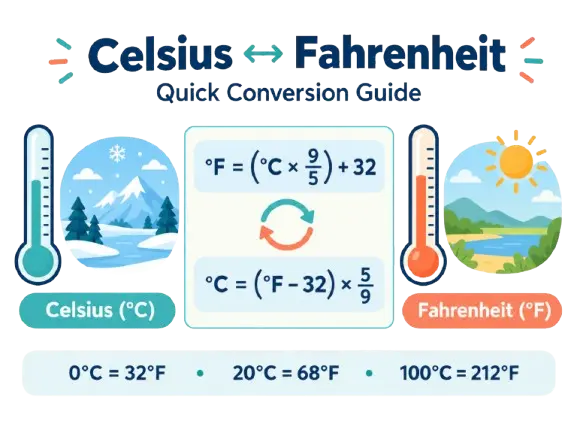
°F = (°C × 9/5) + 32
You can also write it as:
°F = (°C x 1.8) + 32
Both versions give exactly the same result.
The first takes care of adjusting the scale of the temperature, the 32 is added to compensate for the starting points of Celsius and Fahrenheit.
Example: Convert 25°C to Fahrenheit
Using the celsius to fahrenheit formula:
°F = ( 25 x 1.8) + 32
25 × 1.8 = 45
45 + 32 = 77
Therefore:
25°C = 77°F
How to Convert Celsius to Fahrenheit Step by Step
If you want to calculate a temperature yourself follow these two steps.
Step 1: Multiply the Celsius temperature by 1.8.
Step 2: Add 32 to the answer.
For example let us convert 35°C:
35 × 1.8 = 63
63 + 32 = 95
So 35°C equals 95°F.
The same method works for temperatures. For example:
21.5 × 1.8 + 32 = 70.7°F
21.5, °C equals 70.7°F.
How to Convert c to f Easily
If you are trying to convert Celsius to Fahrenheit without a calculator there is a mental trick.
First double the Celsius temperature. Then take 10% off that number. Add 32.
For example take 30°C:
30 × 2 = 60
10% of 60 is 6
60 − 6 = 54
54 + 32 = 86°F
So 30°C equals 86°F.
This method works because doubling a number and then subtracting 10% gives you 1.8 times the number.. That is exactly what the formula, for converting Celsius to Fahrenheit requires: multiply by 1.8 and then add 32.
The Quick “Double It and Add 30” Method
Another popular shortcut is:
Celsius × 2 + 30 ≈ Fahrenheit
This shortcut gives an approximation. It can be handy for weather guesses.
For example
20 × 2 + 30 = 70°F
The precise result is 68°F.
Online discussions about Celsius to Fahrenheit conversion often mention this shortcut because it is easy to remember. However this shortcut should not be used when an exact answer is needed.
For accurate °C to °F conversions use the standard formula instead.
40 c to f: What Is 40°C in Fahrenheit?
If you are looking for how to convert 40°C to Fahrenheit the answer is:
40°C = 104°F
Using the formula:
(40 × 1.8) + 32 = 104°F
A temperature of 40°C is very hot and 40°C is the same, as 104°F.
180 c to f: What Is 180°C in Fahrenheit?
If you want to know what 180 c to f means the answer is 180°C = 356°F. This temperature is often used in cooking especially when baking in an oven.
To convert 180°C to Fahrenheit you can use this formula:
(180 × 1.8) + 32 = 356°F
So 180°C is 356°F. This is an oven setting, for many recipes.
Temperature Examples that Are Useful, in Everyday Life
Understanding conversions helps me read temperatures in everyday life.
Weather
Weather reports can use either Celsius or Fahrenheit depending on the country. For example 20°C equals 68°F while 30°C equals 86°F. A quick estimate can be useful with a shortcut. For weather information however I use the standard conversion.
Cooking
Recipes may give temperatures in either Celsius or Fahrenheit. If your oven uses a scale an exact conversion is better because even a moderate temperature difference can affect cooking results.
For example:
180°C = 356°F
200°C = 392°F
220°C = 428°F
Body Temperature
A referenced human body temperature is about 37°C, which equals 98.6°F. This is another reason temperature conversion’s useful when information is presented in a different measurement system.
Science and Technical Applications
Temperature conversions are also used in laboratories, engineering, manufacturing, weather measurements and other technical fields. For these applications I use the formula rather, than a rough mental shortcut.
Why Is -40°C Equal to -40°F?
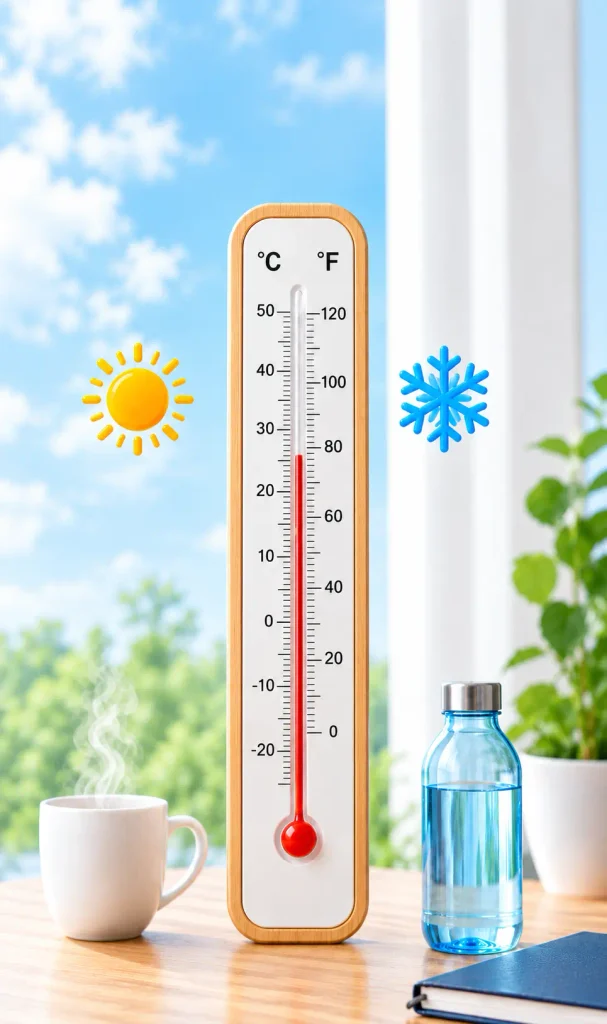
-40 is a unique temperature because the Celsius scale and the Fahrenheit scale are the same at this point.
Using the formula:
°F = (-40 × 1.8) + 32
°F = -72 + 32
°F = -40
Therefore:
-40°C = -40°F
-40 is the temperature where the number is the same, on both Celsius and Fahrenheit scales.
Common Mistakes When Converting Celsius to Fahrenheit
One mistake is not remembering to add 32 after multiplying the Celsius value by 1.8. I have seen many people do this error.
Another mistake is mixing up the two conversion formulas. To convert Celsius to Fahrenheit use:
°F = (°C × 9/5) + 32
To convert Fahrenheit back to Celsius use:
°C = (, °F − 32) × 5/9
It is also important to distinguish between an estimate and an exact conversion. The “double it and add 30” shortcut is convenient. It will not always give the precise answer. Always double check your numbers.
Where Celsius and Fahrenheit Are Used
Celsius is the temperature scale used in most countries around the world. It is commonly used for weather, cooking, science and everyday temperature measurements.
Fahrenheit is mainly used for temperatures, in the United States. It is also seen in some locations and online content.
Because both scales appear in weather reports, recipes, product instructions, travel information and scientific material knowing how to switch between them is useful.
Quick Temperature Facts
- 0°C = 32°F — water freezes under standard conditions.
- 20°C = 68°F.
- 25°C = 77°F.
- 30°C = 86°F.
- 37°C = 98.6°F.
- 40°C = 104°F.
- 100°C = 212°F — water boils under standard atmospheric pressure.
- -40°C = -40°F.
- A change of 1°C equals a change of 1.8°F.
- To convert exactly multiply the Celsius temperature by 1.8. Then add 32.